The honest answer first
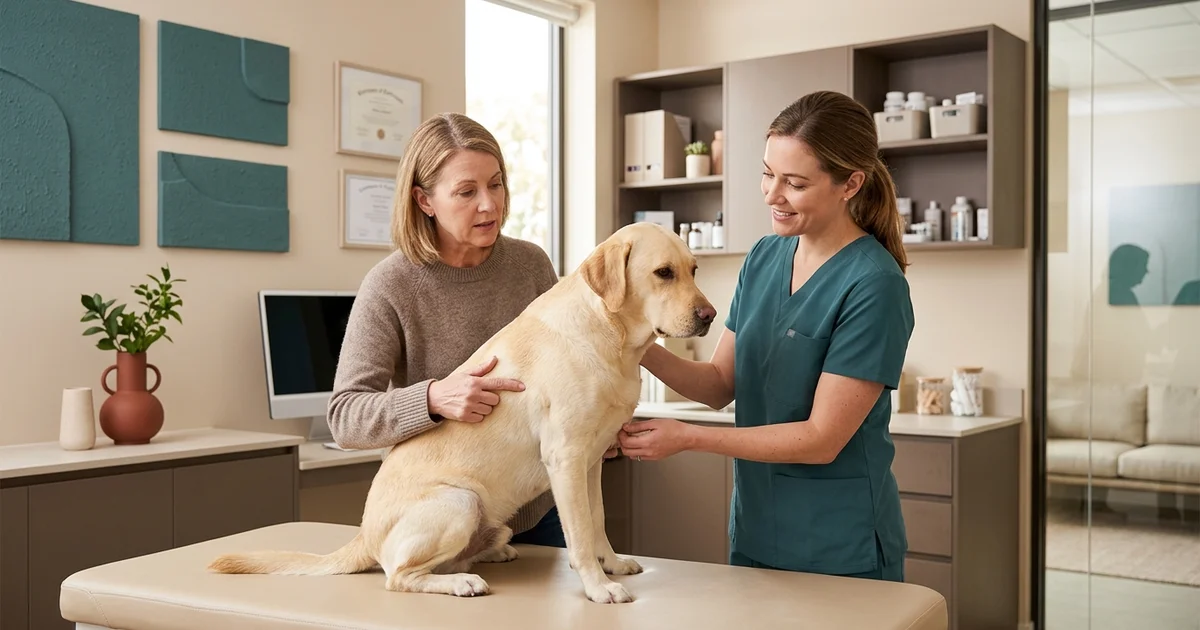
Nobody can tell whether your dog’s lump is cancerous by looking at it. Not you, not your regular vet, and not us. Benign and malignant masses can look and feel identical from the outside, so the reassurance you want has to come from a test, not an opinion.
The good news is that the test is quick, inexpensive, and usually available the same day. This guide explains what we are looking for, the warning signs that should prompt action, and what the answer most often turns out to be. For Talleyville owners with senior dogs, it is one of the most common reasons to get in touch.
Benign masses we see most often
Lipomas are benign fatty tumors, very common in middle-aged and older dogs, especially Labradors and retrievers. They feel soft, move freely under the skin, and grow slowly. Most are harmless and only need removing when they grow large enough to interfere with a leg or sit somewhere awkward.
Histiocytomas usually appear on young dogs as a small, round, raised, often hairless button. They can look alarming because they appear quickly and sometimes ulcerate. Many disappear on their own within a couple of months.
Sebaceous adenomas are the small warty growths that collect on older dogs, particularly on the head and body. They are benign and usually harmless, and worth removing when they bleed or catch on a collar.
The malignant one that matters most
Mast cell tumors are the most common malignant skin tumor in dogs, and the reason we take margins so seriously. They are notorious for looking ordinary. A mast cell tumor can present as a soft, mobile lump that feels exactly like a lipoma. Some change size from day to day, swelling and shrinking, which is a clue in itself.
They also vary enormously in behavior. Some are low grade and cured by complete removal. Others are aggressive. A mast cell tumor removed with too little margin comes back, which is why identifying one before surgery changes the plan.
How we actually find out
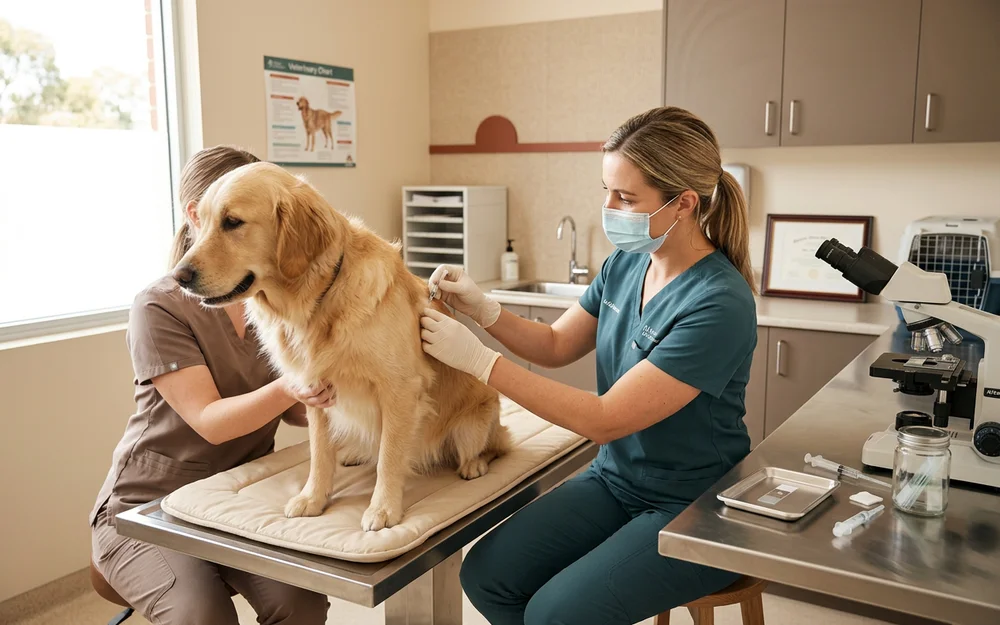
A fine-needle aspirate (FNA) is the first step. A thin needle draws a few cells from the lump, the sample goes onto a slide, and it can be examined quickly. It needs no sedation, takes moments, and most dogs barely notice. An FNA often identifies a lipoma or a mast cell tumor with confidence, which is enough to plan surgery properly.
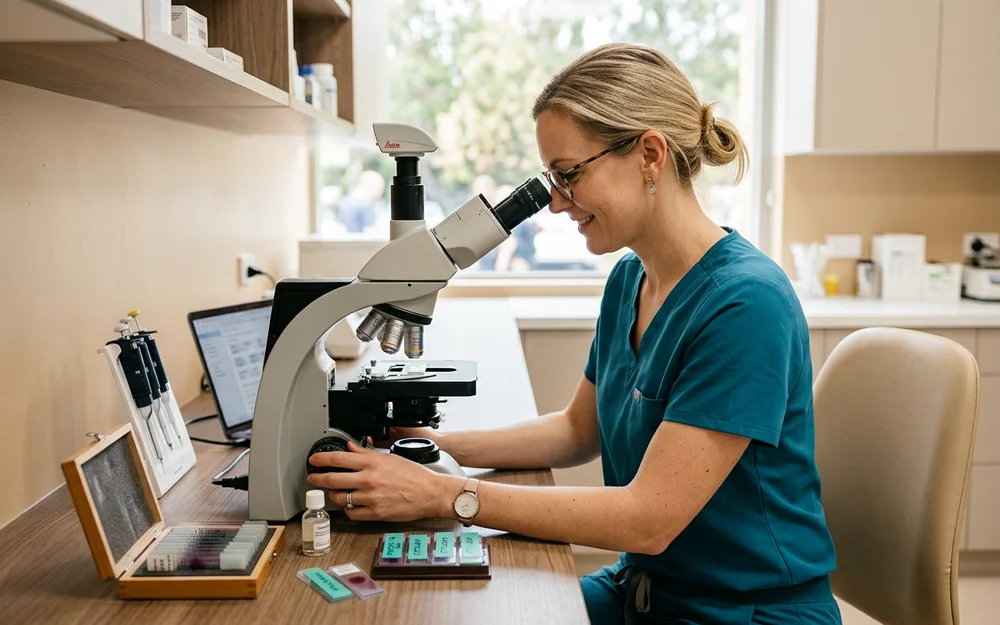
Histopathology is the definitive test and happens after removal. The whole mass goes to a laboratory, where a pathologist examines its structure, grades it if malignant, and, because the surgical margins are inked before sending, reports whether the tumor reached the edge of the removed tissue. That last detail decides whether anything more is needed.
Warning signs that mean act now
Take a lump seriously if it is:
growing noticeably over weeks, firm rather than soft, fixed to the tissue underneath rather than moving freely, ulcerated or bleeding, changing color, or accompanied by your dog being generally off.
Specific red flags to check at home:
- Size change: measure the lump with a ruler or tape and note the date. Growth of a few millimeters in a month is meaningful.
- Texture: a lump that started soft and has turned firm or knobbly.
- Mobility: a lump you can no longer slide under the skin.
- Surface: redness, hair loss over the lump, scabbing, or bleeding.
- Fluctuation: a lump that swells up and goes down again over hours or days.
- Your dog’s behavior: licking or scratching at it, or general lethargy and a poorer appetite.
Location matters too. A lump near a joint, an eye, or the mouth is much harder to remove with adequate margins once it grows, so the window for straightforward surgery is narrower.
What to do next
If you have found a lump, the practical step is an evaluation with an aspirate rather than weeks of anxious watching. It gives you an answer quickly, and if the answer is benign you can stop worrying on the strength of something more solid than hope.
If it is not benign, early removal with proper margins is the biggest single factor in the outcome. Book a mass evaluation with Talleyville Dog Surgery and we will tell you plainly what we find, what we recommend, and what it costs, including when the honest recommendation is simply to keep an eye on it.