Scheduled Within Days
Wilmington, DE & the Brandywine Valley
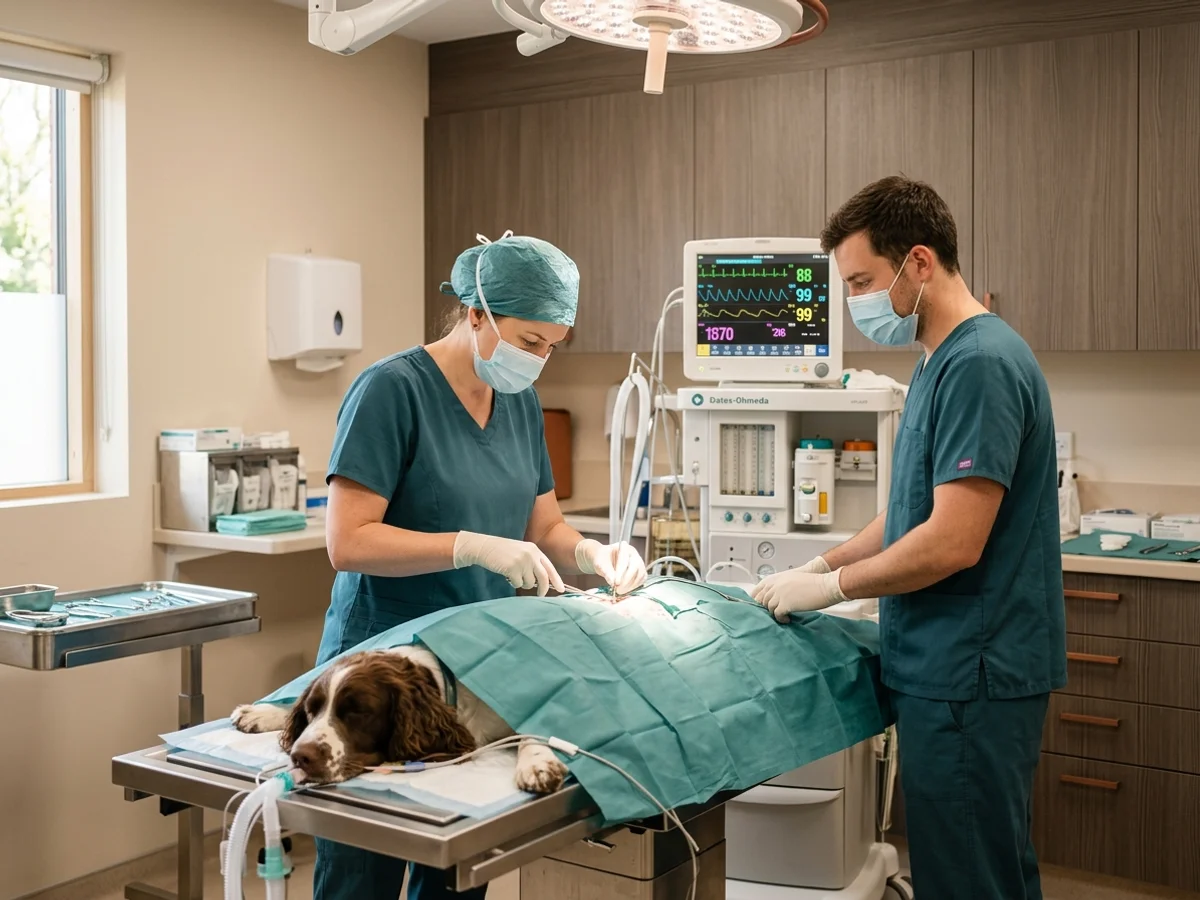
Dog Bladder Stone Surgery in Talleyville, DE, With Flushing That Keeps Stones From Coming Back
Surgical removal of painful bladder stones for Talleyville dogs, with retrograde flushing of the urethra and stone analysis to keep new stones from forming.
- 30-40% below referral hospitals
- Scheduled within days
- Full anesthetic monitoring
Starting Price
$950
Credential 01
4.9★ Google (150+ reviews)
Credential 02
Surgery Within Days
Credential 03
30-40% Below Referral Hospitals
Credential 04
Pre-Anesthetic Bloodwork & Full Monitoring
What is a canine cystotomy?
A cystotomy is a surgical incision into the urinary bladder. For Talleyville dogs, Talleyville Dog Surgery coordinates this procedure with experienced general practice surgeons to remove uroliths, the bladder stones that form in the urine and grind against the bladder wall every time your dog moves, jumps, or squats.
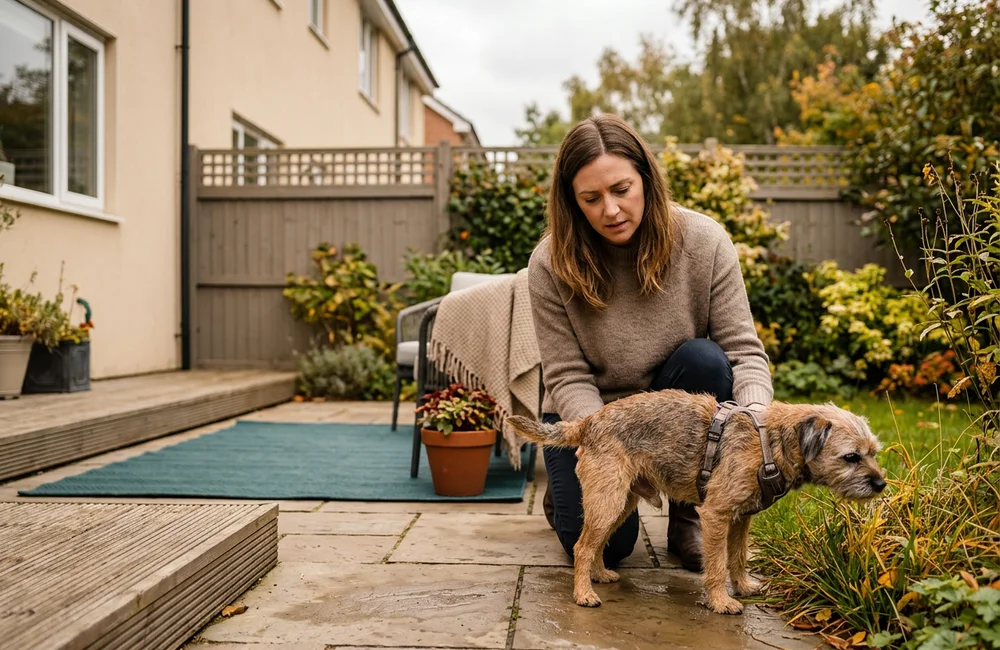
Urolithiasis is far more painful than most dogs let on. Stones often develop alongside a urinary tract infection (UTI), which adds to the discomfort. The first signs owners notice are usually changes in routine: a dog who takes far longer in the yard, asks to go out every half hour, has accidents indoors after years of being reliable, or leaves pink-tinged spots on the patio or driveway.
How do you know your dog has bladder stones?
- Straining to urinate, or taking much longer than usual
- Frequent small puddles instead of one normal-sized one
- Blood in the urine, often easiest to see on snow, concrete, or light paving
- Indoor accidents from a dog who has been house-trained for years
- Licking at the genital area more than normal
- Whining, flinching, or pacing while trying to urinate
Producing nothing at all is an emergency
A dog straining without passing any urine may have a complete urethral obstruction. That pushes pressure back into the kidneys and can become life-threatening within about a day. Go to your nearest emergency hospital immediately.
Struvite vs calcium oxalate - why stone type matters
Two stone types make up most canine cases, and they behave in completely different ways.
| Struvite | Calcium oxalate | |
|---|---|---|
| Common cause | Usually secondary to a urinary tract infection | Metabolic; more common in certain breeds |
| Dissolves with diet? | Often yes, over several weeks | No, surgery is required |
| Prevention | Treat infection, therapeutic diet | Urine-diluting diet, high water intake |
| Typical patients | More often female dogs | More often male dogs, small breeds |
That is why removed stones are sent for stone analysis. Surgery fixes today’s problem. The analysis is what stops the same surgery being needed again in eighteen months. Small breeds such as schnauzers, Yorkies, and Shih Tzus, popular in the walkable streets around Fairfax, are well represented among the oxalate cases we see.
What happens during bladder stone surgery?
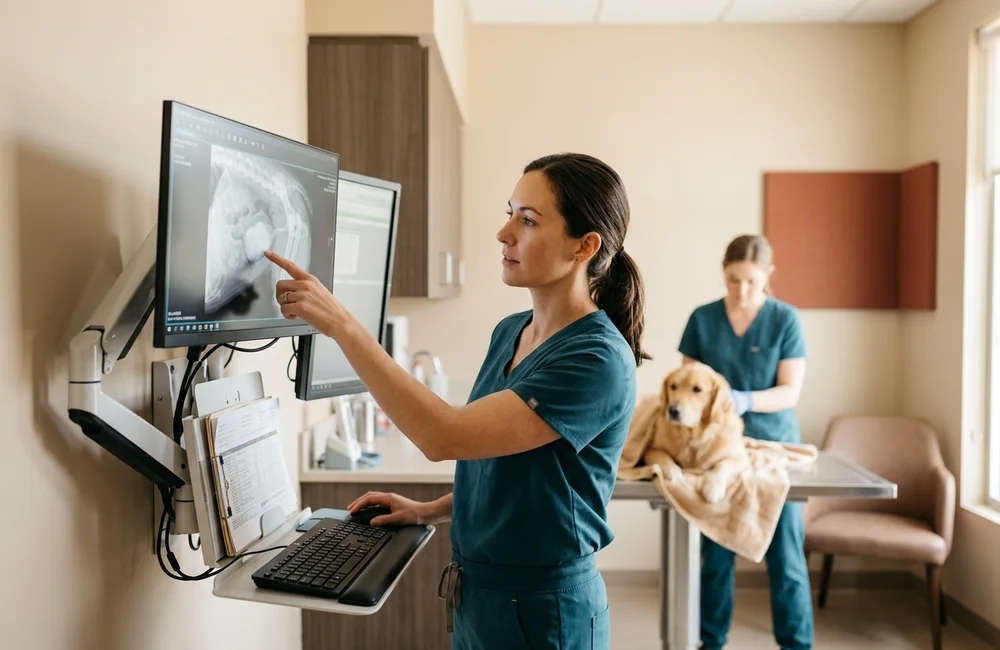
Urinalysis and culture come first to identify infection and crystal type. Abdominal radiographs (X-rays) or ultrasound confirm how many stones there are and where they are sitting. Pre-anesthetic blood screening pays close attention to kidney values, because a partially obstructed dog can arrive with raised numbers that change the anesthetic plan.
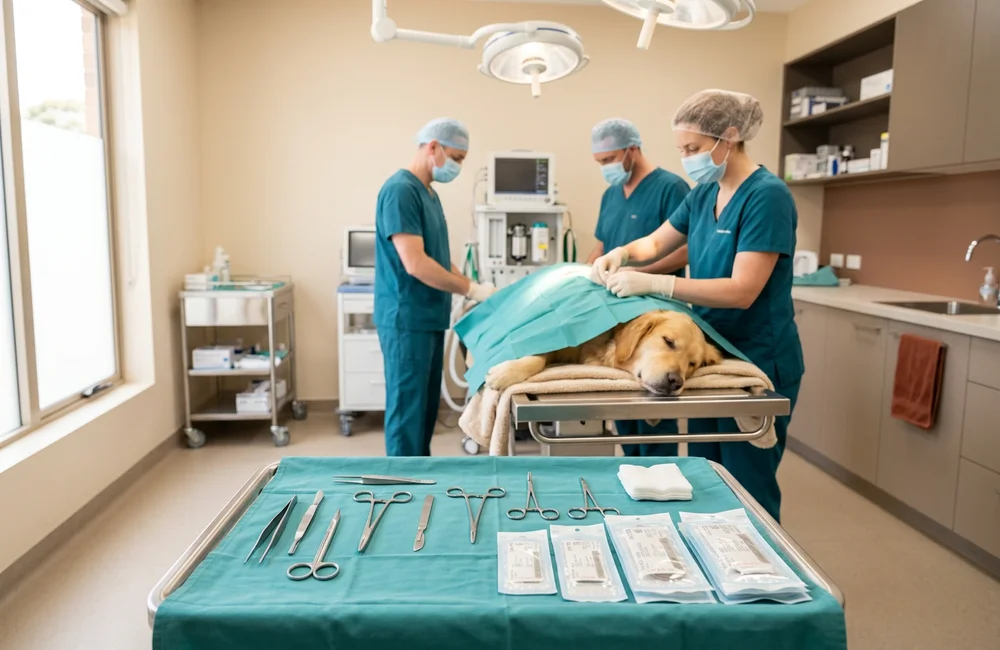
The cystotomy incision goes through the abdominal midline and then into the least vascular part of the bladder wall. The surgeon removes every visible stone and then passes a catheter to perform retrograde urethral hydropropulsion, flushing sterile fluid back up the urethra so any small fragment lodged there is pushed into the bladder and retrieved. Skipping this step is the most common reason a dog needs a second operation within months.
Bladder mucosal closure uses fine absorbable suture, Monocryl or PDS, placed so that no knots sit inside the bladder. Exposed suture material inside the bladder can become the core of a new stone.
What does cystotomy recovery look like?
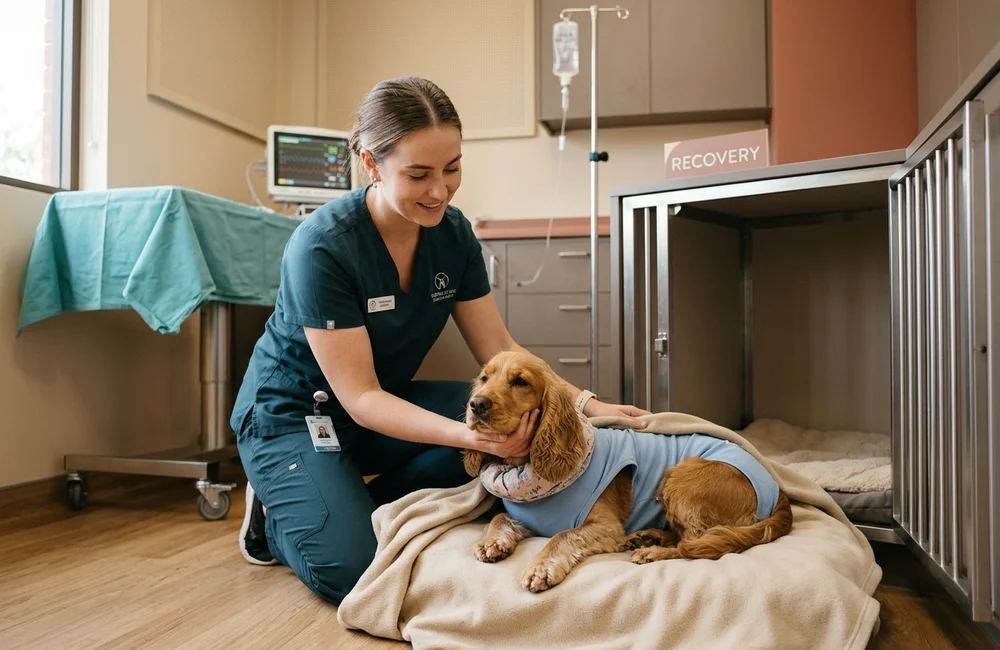
Post-op hematuria management is mostly reassurance. Blood-tinged urine for three to five days is normal and should fade a little each day. Heavy bleeding, clots, or being unable to urinate needs an immediate call. Most dogs go home the same evening and are comfortable within a couple of days. Lead walks only for two weeks while the bladder wall and abdominal incision heal.
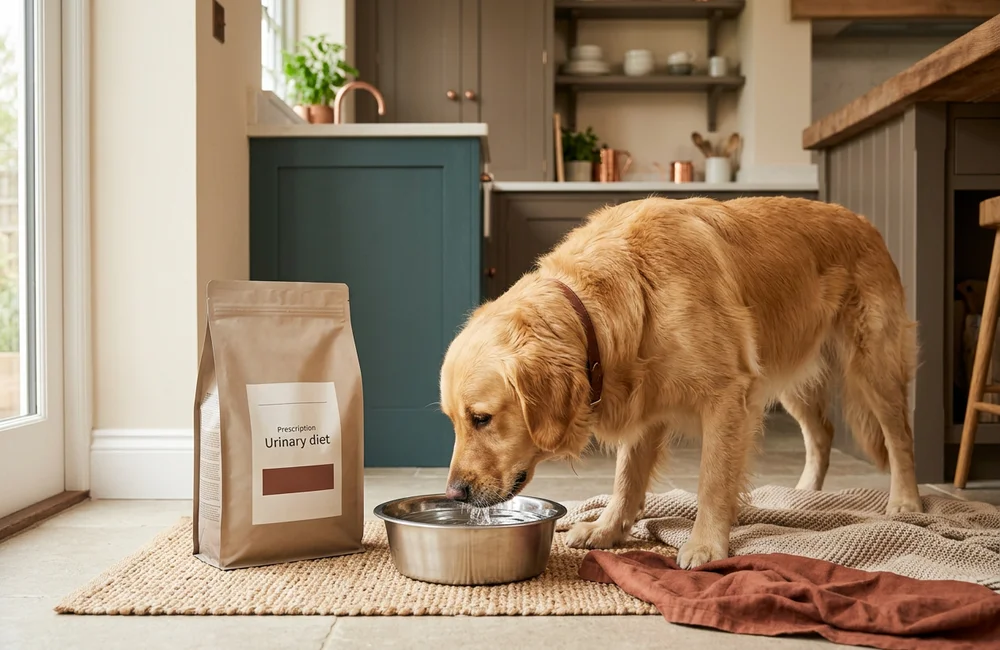
Long-term prevention depends on three things: a therapeutic prescription diet matched to the stone analysis (typically a formulation from Hill’s, Royal Canin, or Purina), plenty of water, and periodic urinalysis to catch a returning UTI before it seeds new stones. Adding water to meals and keeping a second bowl upstairs both help, particularly through humid Delaware summers. Where there is any doubt about clearance, a post-op cystogram confirms the bladder is empty.
How does our pricing compare?
| Feature | Typical Referral Hospital | Talleyville Dog Surgery |
|---|---|---|
| Cystotomy starting price | $3,000+ | $950 (2026 pricing) |
| Wait time | 4-6 weeks | Within days |
| Pre-anesthetic bloodwork | Sometimes extra | Included |
| Continuous vital monitoring | Varies | SpO2, ECG, BP, temp on every case |
| Retrograde urethral flushing | Often skipped | Standard protocol |
| Follow-up evaluation | Additional fee | Complimentary at 10-14 days |
When is a non-stone cystotomy needed?
The same surgical approach is used to repair traumatic bladder tears after a road accident, take deep tissue biopsies of the bladder wall, and remove benign bladder-wall masses. These start at $900 (2026 pricing) and follow the same monitoring protocol. Owners in Talleyville and the rest of the Brandywine Hundred book both stone and non-stone cystotomies with us, usually after their regular vet has confirmed the diagnosis. For a full breakdown of what is and is not included, see our dog bladder stone surgery cost guide, or call Talleyville Dog Surgery on (302) 599-0299 with your dog’s X-ray results.
Price Ledger
How much does bladder stone surgery cost?
The starting package covers a standard urolith extraction. Stone analysis, prescription diets, and follow-up imaging are quoted separately.
Starting From
$950
starting urolith extraction package (non-stone cystotomy from $900)
Included in the price
- Pre-anesthetic blood screening and urinalysis
- Anesthesia with continuous multi-parameter monitoring
- Cystotomy with careful bladder mucosal closure
- Retrograde urethral hydropropulsion to clear the tract
- Home-recovery medications and discharge checklist
- Complimentary 10-to-14 day healing evaluation
Quoted separately
- Stone analysis at an external laboratory
- Prescription urinary diet
- Follow-up cystogram or repeat imaging
Nothing gets added to your bill without your approval first. Ask for the written estimate before you commit.
We accept cash, credit card, and CareCredit financing. If cost is the barrier to treating your dog, tell us when you request a booking.
Free Tool
Try our Dog Surgery Cost Estimator
Estimate the cost of your dog's surgery and see how much you could save versus a corporate referral hospital.
Why Us For This Surgery
Why owners choose us for bladder stone surgery
01
We flush the urethra, not just the bladder
One fragment left in the urethra is the quickest way back to surgery. Retrograde hydropropulsion is part of the standard package for every Talleyville dog, not an add-on.
02
Stone analysis shapes the prevention plan
Struvite and calcium oxalate need entirely different diets. Knowing which one came out is how a second operation gets avoided.
03
From $950 rather than a $3,000+ quote
Owners often reach us holding a referral estimate above $3,000 for this exact procedure. The surgical standard is identical. The overhead is not.
04
Non-stone cystotomy covered too
Traumatic bladder tears, bladder-wall biopsies, and benign bladder-wall masses fall under the same service, from $900.
Procedure Ledger
How bladder stone surgery works
What happens from your first booking request through to your dog's follow-up evaluation.
Step 01
Diagnosis
Urinalysis and culture identify infection and crystal type. Radiographs or ultrasound confirm the number, size, and position of the stones.
Step 02
Pre-anesthetic screening
Blood screening checks kidney function in particular, because a partially obstructed dog can have elevated values that change the anesthetic plan.
Step 03
Cystotomy and flushing
We open the bladder, retrieve every stone, then perform retrograde urethral hydropropulsion to flush any fragment sitting in the urethra back into the bladder before closing.
Step 04
Recovery and prevention
Mild blood-tinged urine is expected for a few days. Stone analysis guides the prescription diet that keeps new stones from forming.
Need bladder stone surgery for your dog?
Send us the details and we will confirm honest pricing and the soonest surgical date, usually within days.
Deeper Reading
Bladder Stone Surgery guides
Plain-language answers to the questions owners ask before booking this surgery.
process
Dog Bladder Stone Surgery Recovery and Prevention
What to expect after a Talleyville dog's cystotomy: blood in the urine, hydration, diet, activity limits, and the follow-up that prevents recurrence.
Read guidecost
Dog Bladder Stone Surgery Cost for Talleyville, DE
A full cystotomy walkthrough and honest cost guide for Talleyville, DE dog owners: what is included, what changes the price, and how to compare quotes.
Read guideconcern
Signs Your Dog Has Bladder Stones
Straining, blood in the urine, frequent small puddles, and accidents: the signs a Talleyville dog may have bladder stones, and when it is urgent.
Read guidescenario
Struvite vs Calcium Oxalate Stones in Dogs
Struvite vs calcium oxalate bladder stones in dogs: dissolution or surgery, diet, and prevention, explained for Talleyville dog owners.
Read guidedefinition
What Is Canine Cystotomy (Bladder Stone Surgery)?
How a canine cystotomy works for Talleyville dogs: the bladder incision, stone retrieval, urethral flushing, closure, and steps that prevent recurrence.
Read guideFrom the Practice Journal
Real bladder stone surgery cases and safety standards
Case write-ups and practice updates covering what owners most often want reassurance about.
Owner Ledger
What owners say about our bladder stone surgery
Rated 4.9 across 150+ reviews from dog owners across the Brandywine Valley.
Review 01
“Bladder stones in our schnauzer, and a six-week wait elsewhere. We had a date within the week, the stone analysis was quoted up front, and she has been on her new diet ever since.”
Anita P.
Fairfax, DE
Review 02
“Our Yorkie kept asking to go out every twenty minutes and there was blood on the patio. They explained the flushing step, he was home that evening, and he has been fine for a year.”
Rob L.
Weldin Ridge, DE
Review 03
“Clear pricing, no pressure, and a proper explanation of why oxalate stones will not dissolve with diet. The recovery was easier than we feared.”
Claire N.
Hockessin, DE
Service FAQ
Bladder Stone Surgery questions
01How much does dog bladder stone surgery cost in Talleyville?
Our urolith extraction package starts at $950 (2026 pricing). It includes pre-anesthetic blood screening, urinalysis, anesthesia with continuous monitoring, the cystotomy, retrograde urethral hydropropulsion, medications, and the follow-up healing evaluation. Referral hospitals in the area commonly quote $3,000 or more. Stone analysis and any prescription diet are quoted separately because they depend on what is found.
02My dog is straining but nothing is coming out. What do I do?
Go to the nearest emergency hospital now. A dog that strains and produces no urine may have a complete urethral obstruction, which backs pressure into the kidneys and can become life-threatening within about a day. Once your dog is decompressed and stable, contact us about the surgery itself. If urine is still coming out, call us the same day.
03Can my dog's stones be dissolved with diet instead?
Some can. Struvite stones often dissolve over several weeks with a therapeutic diet and treatment of any urinary infection. Calcium oxalate stones do not dissolve and must be removed surgically. That is why identifying the stone type matters so much.
04Is blood in the urine normal after surgery?
Yes, for the first three to five days. It should get lighter each day. Heavy fresh bleeding, clots, or straining with nothing produced needs an immediate call or text to the recovery line.
05How do I stop the stones coming back?
Three things make the biggest difference: removing every fragment including any in the urethra, feeding the diet matched to the stone analysis, and keeping your dog drinking plenty of water. Periodic urinalysis catches a returning infection before it seeds new stones.
06How soon can surgery be scheduled?
Within days. Bladder stones are painful and can progress to complete obstruction, so they are not treated as routine elective surgery. Partially obstructed dogs are booked same or next day.
Still have questions about your dog?
Send us the details and we will come back with a straight answer, an honest price, and the soonest surgical date we can offer.
Request Surgery BookingCross Reference
Related surgeries
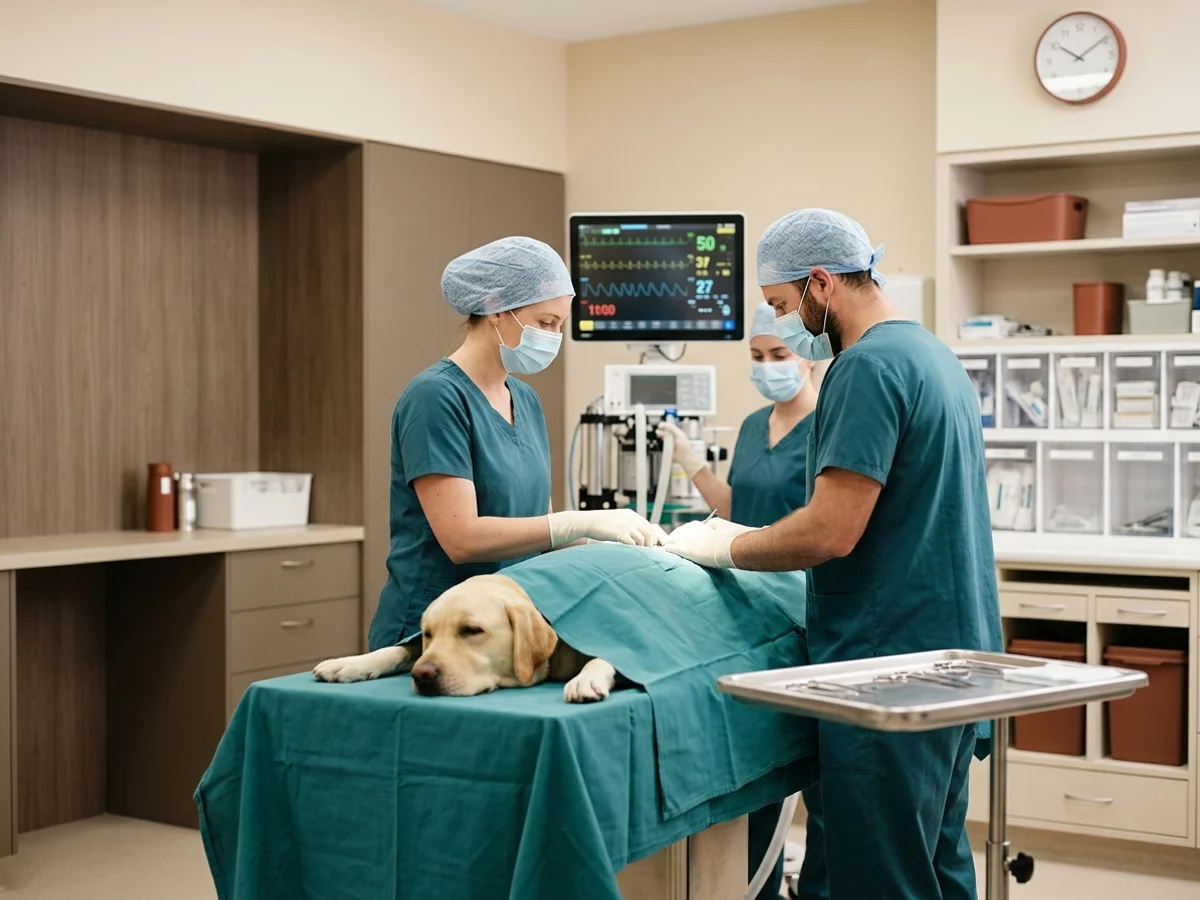
Emergency Foreign Body Removal in Talleyville
Urgent abdominal surgery for Talleyville dogs to remove swallowed socks, corn cobs, toys, rocks, and string from the stomach or intestine before damage sets in.
View surgery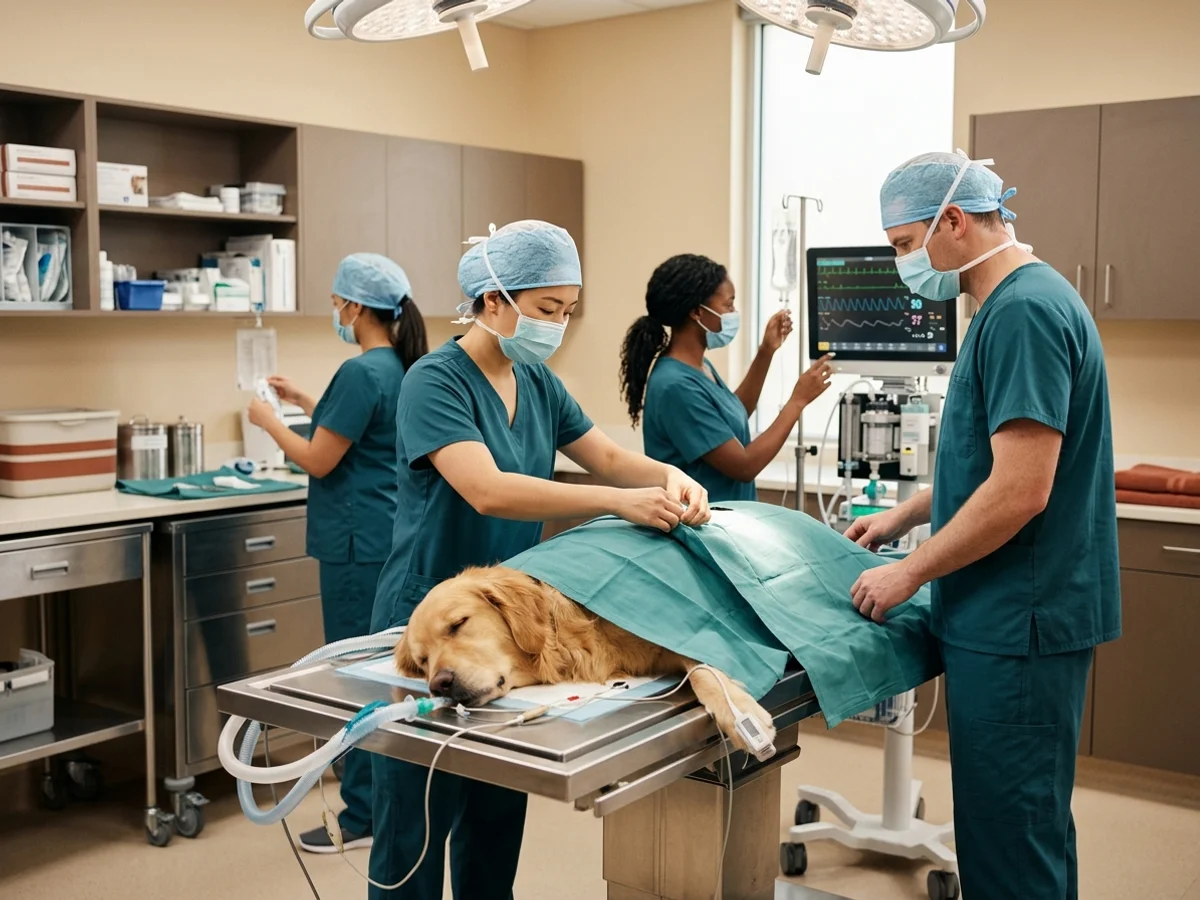
Emergency Pyometra Surgery in Talleyville
Urgent surgery for Talleyville dogs to remove an infected, pus-filled uterus, with stabilization before anesthesia and same or next-day booking.
View surgery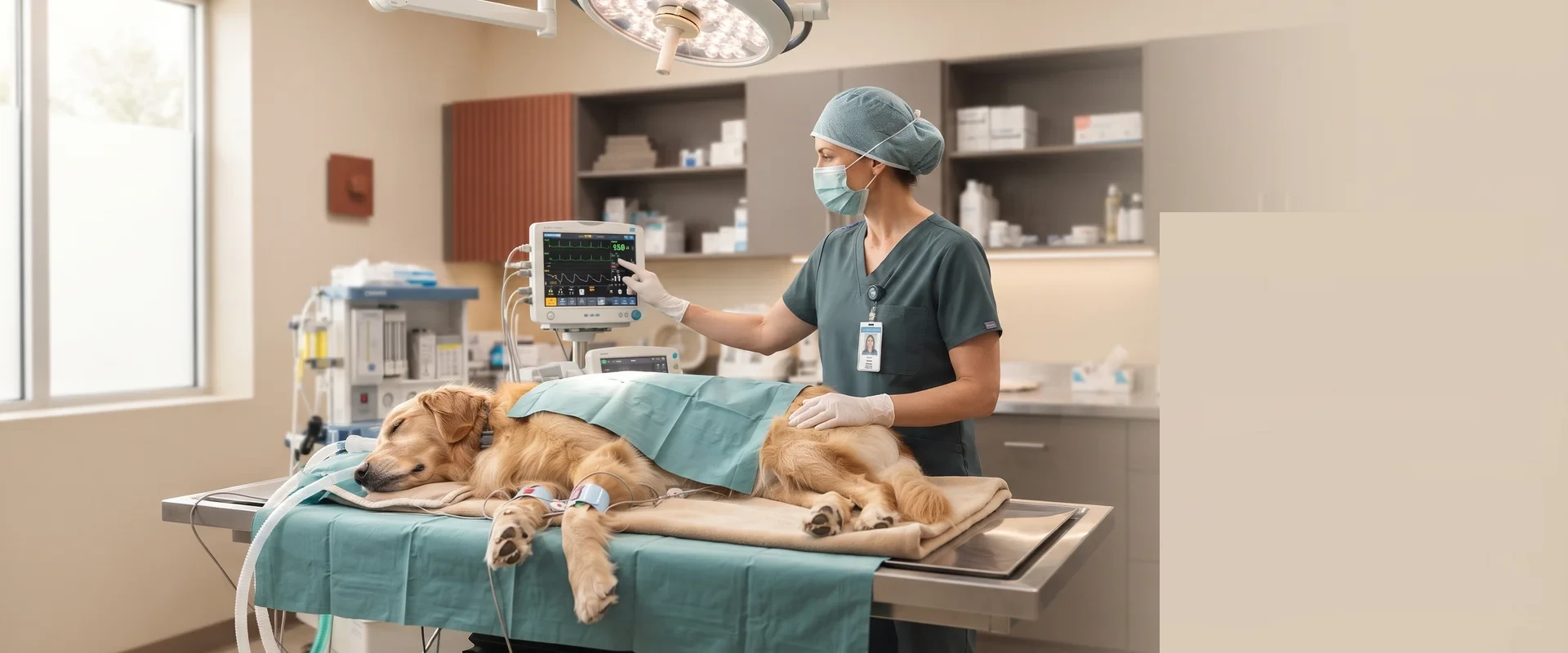
Urgent surgeries scheduled within days
Ready to book bladder stone surgery?
Honest pricing, full anesthetic monitoring, and a surgical date in days. Serving Talleyville DE, Greenville DE, Centerville DE, Wilmington DE, Hockessin DE, Claymont DE, Chadds Ford PA, and Glen Mills PA.
- 30-40% below referral hospitals
- Scheduled in days, not weeks
- Full monitoring on every case