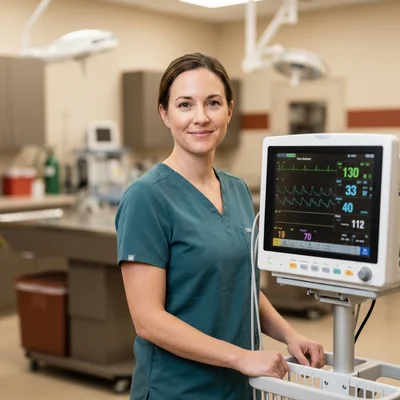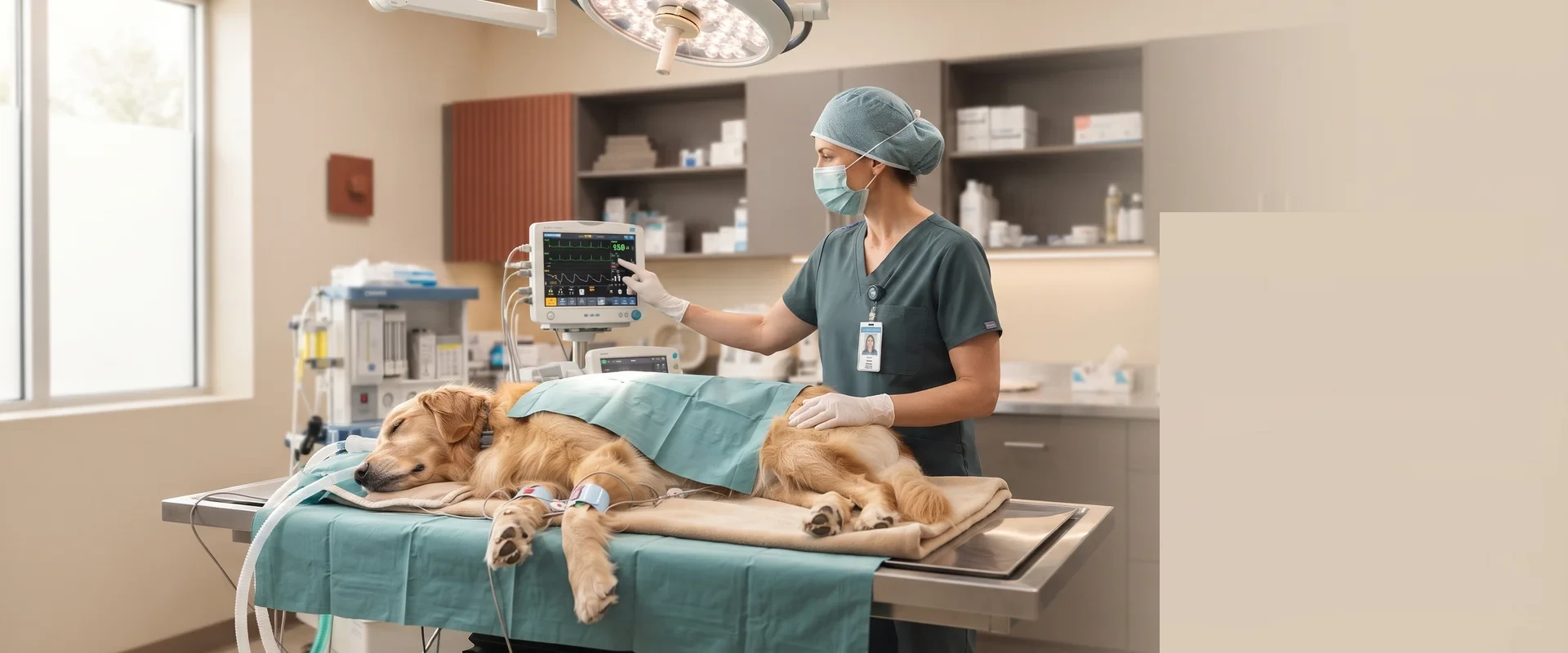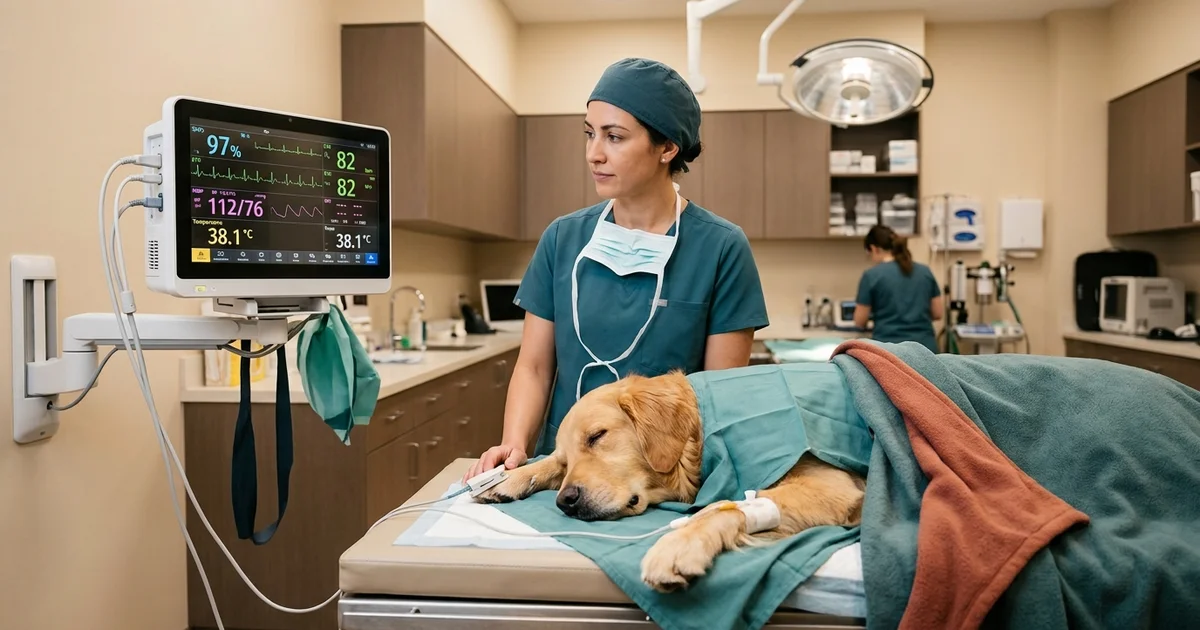
Owners in Talleyville ask us about anesthesia more than about anything else, usually before they ask about price. So we want to be precise about it. Every canine surgery booked through Talleyville Dog Surgery includes comprehensive pre-anesthetic blood screening and continuous multi-parameter vital sign monitoring. That standard has been in place across our surgical network for some time, and it is now formally written into the protocol every partner practice works to.
It is not an upgrade, and it is not an optional line you can tick on the estimate. It applies to every procedure, from a $450 lump removal to a $1,500 splenectomy.
What “multi-parameter” actually means
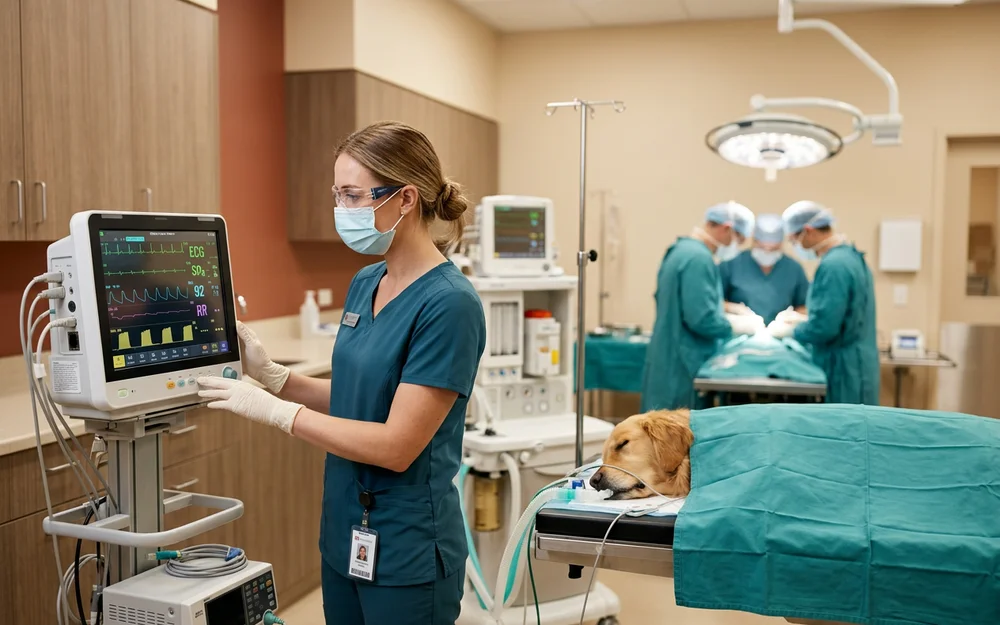
Four measurements are tracked continuously from induction through to recovery, by a team member whose only job is watching them:
Blood oxygen saturation (SpO2) shows how well oxygen is getting to the tissues. A dropping saturation is the earliest sign that breathing support needs adjusting, and it shows up well before anything changes that you could see by looking at the dog.
ECG rhythm matters more in some operations than others. Splenic cases are known for ventricular premature contractions, irregular beats that can appear during surgery and for 24 to 48 hours afterwards. Most settle on their own. Some need treatment, and none can be treated if nobody is watching the trace.
Non-invasive blood pressure (NIBP) is the number that most often leads to an adjustment. Anesthesia lowers blood pressure, and prolonged low pressure is what puts the kidneys of an older dog at risk. Measuring it means it can be corrected with fluid rate or drug changes before it becomes a problem.
Core body temperature falls quickly under anesthesia, particularly in small dogs and in abdominal surgery where the body cavity is open. A cold patient metabolizes drugs more slowly and takes longer to wake, so dogs are actively warmed rather than just covered with a blanket.
Why the bloodwork comes first
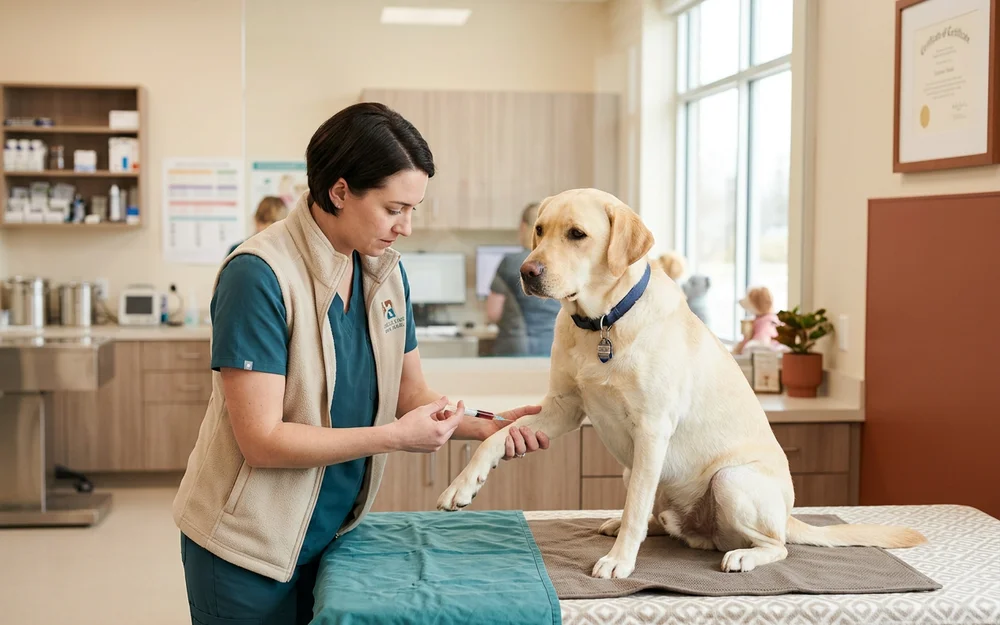
Pre-anesthetic blood screening happens before a surgical date is confirmed, not on the morning of the operation. Liver and kidney values decide how anesthetic drugs are processed and cleared. Packed cell volume and total protein reveal anemia or dehydration that changes the fluid plan.
This is most important for exactly the dogs who need surgery most. In Talleyville that often means a senior retriever with a lump, an older unspayed female with pyometra, or a big shepherd with a splenic mass. Building the anesthetic around measured values instead of a standard template is not a refinement in those cases. It is the safety plan.
A safety standard is only a standard if it applies to the cheapest procedure on the list.
Nerve blocks and multi-modal pain control
Alongside monitoring, our surgeons use localized nerve blocks wherever the procedure allows: infraorbital and mandibular blocks for dental and oral surgery, local blocks for mass removal, and line blocks for abdominal incisions. Why this matters so much for extractions is explained in our guide to dental X-rays and nerve blocks.
The benefit works two ways. With the area properly numbed, the general anesthetic can run lighter, which is safer. And your dog wakes up without the surge of pain that otherwise arrives as the anesthetic wears off. Pain control then continues at home with the medications supplied at discharge.
What has not changed
Pricing. This standard has always been part of our figures, and formalizing it adds nothing to the cost of surgery for Brandywine Hundred families. Mass removal still starts at $450, cystotomy at $950, pyometra surgery at $1,100, foreign body removal at $1,200, splenectomy at $1,500, and fracture repair at $1,800. The full breakdown is in our dog surgery cost guide.
Recovery support is unchanged as well: home medications, a structured discharge checklist, a 24/7 post-op recovery text line, and a complimentary 10-to-14 day healing evaluation on every case. If you are a Talleyville owner comparing estimates, ask every provider the same question: who is watching my dog under anesthesia, and what are they measuring?
Want to know what is included in your dog’s quote? See our mass and tumor removal service