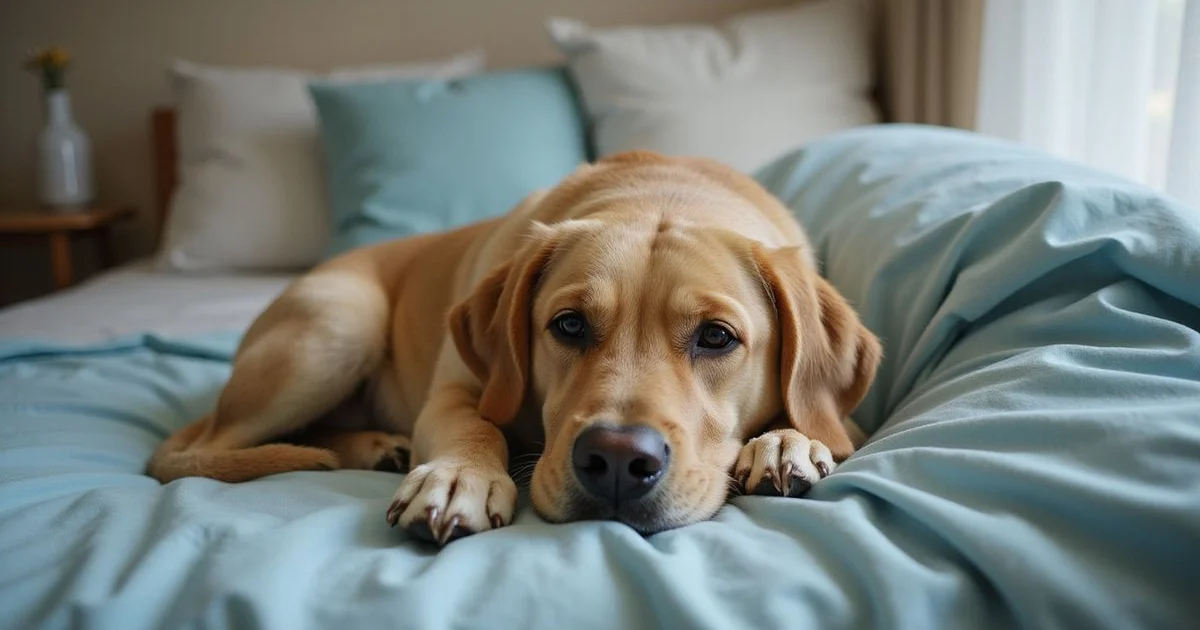
On a Saturday afternoon in a house just off Foulk Road in Talleyville, a four-year-old golden retriever named Murphy pulled a sock out of the laundry basket and swallowed it before anyone could reach him. His owner saw the whole thing, which is more than most owners get. If you are in that position right now, our guide on what to do when a dog swallows a sock covers the decisions below in more depth.
By Sunday morning Murphy had vomited three times and ignored his breakfast. His owner called a large emergency hospital and was told the surgery could be done, for an estimate above $3,000, but not for six weeks unless he became sick enough to count as an emergency admission.
She called us on Monday morning. Murphy was in surgery on Wednesday.
Why the six-week answer was the wrong answer
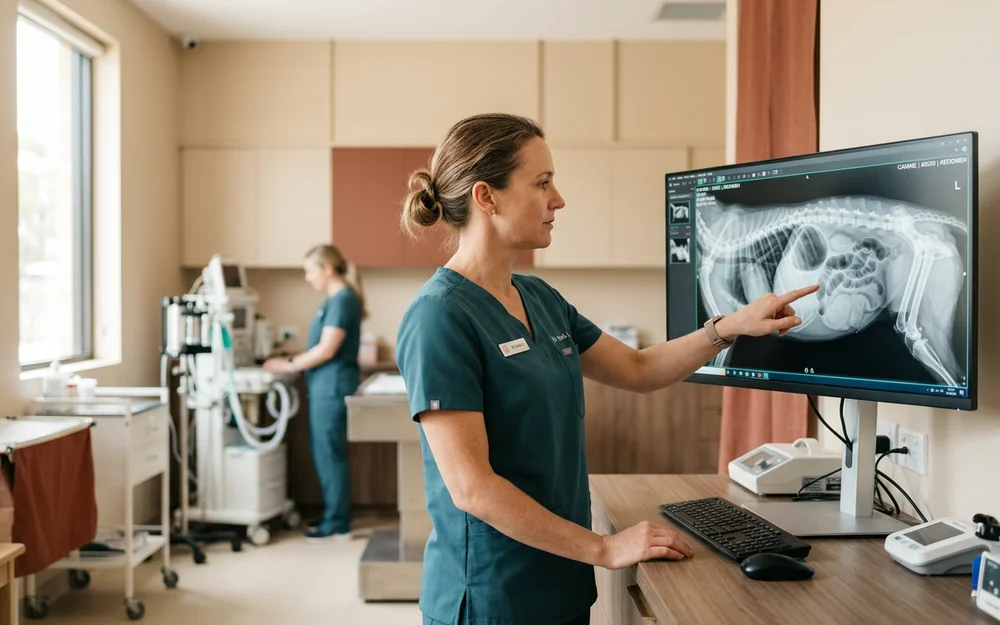
Fabric does not show on an X-ray. What does show is what it causes: gas building up behind the blockage, loops of intestine swollen where they should lie flat, and a pattern that is easy to read for anyone who looks at abdominal films every week. Murphy’s radiographs on Monday afternoon showed exactly that.
The danger of waiting with an intestinal obstruction is not only discomfort. A lodged object presses on the bowel wall from the inside. Given enough time, that pressure cuts off the blood supply to that segment, and bowel that has lost its blood supply cannot simply be opened, emptied, and closed. It has to be removed and the healthy ends rejoined. That is a resection and anastomosis, and it is a longer, riskier, and more expensive operation.
Murphy’s sock had already moved from his stomach into the jejunum. Two days earlier it would have been a gastrotomy. Two days later it might have needed a resection. On Wednesday it was a straightforward enterotomy. Our guide to gastrotomy vs enterotomy surgery explains the difference between those operations.
The variable that decides which surgery your dog gets is usually time, not luck.
An obstruction operated on today is a smaller, safer, cheaper procedure than the same obstruction operated on next week.
What the surgery involved
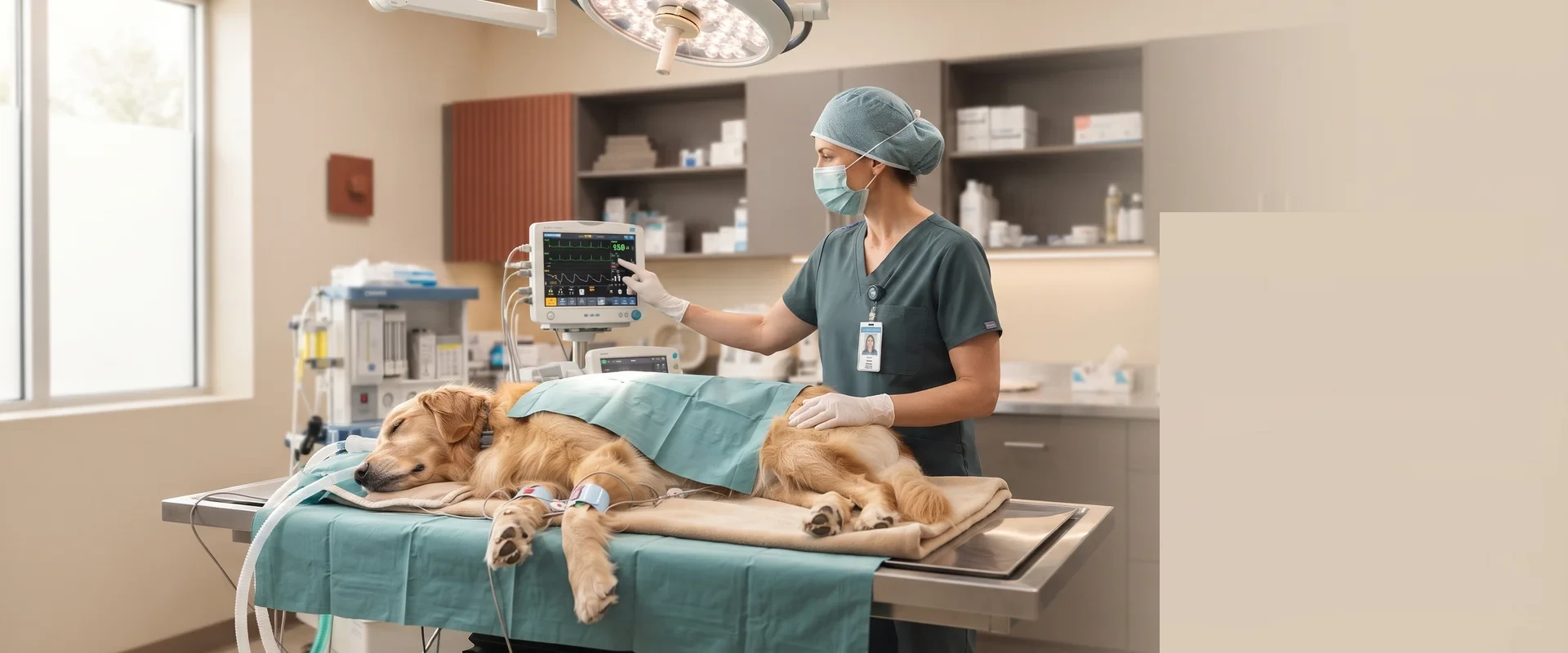
After two days of vomiting, Murphy arrived dehydrated with unsettled electrolytes, so IV fluid resuscitation started before anesthesia. Pre-anesthetic bloodwork showed his kidney values were still normal, which is not guaranteed in a dog who has not kept water down for a day or more.
Operative time was under an hour. A midline incision, the affected loop of jejunum isolated, a small enterotomy, the sock removed in one piece, and then the whole intestinal tract checked by hand from stomach to colon. That final step matters. Dogs who eat one sock have often eaten two, and finding the second three days later is nobody’s idea of a good outcome. Murphy had eaten just the one.
His blood oxygen saturation, ECG rhythm, blood pressure, and core temperature were monitored continuously throughout, and the closure was done in layers with cefazolin cover.
The total was $1,200, including the radiographs and fluid support, the same figure listed in our dog surgery cost guide.
The first fortnight at home
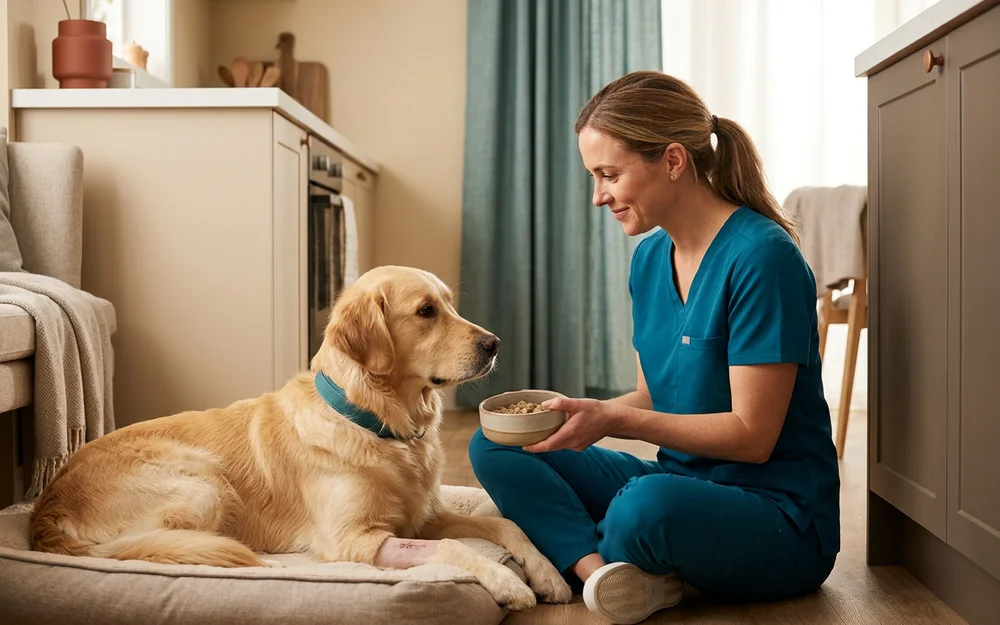
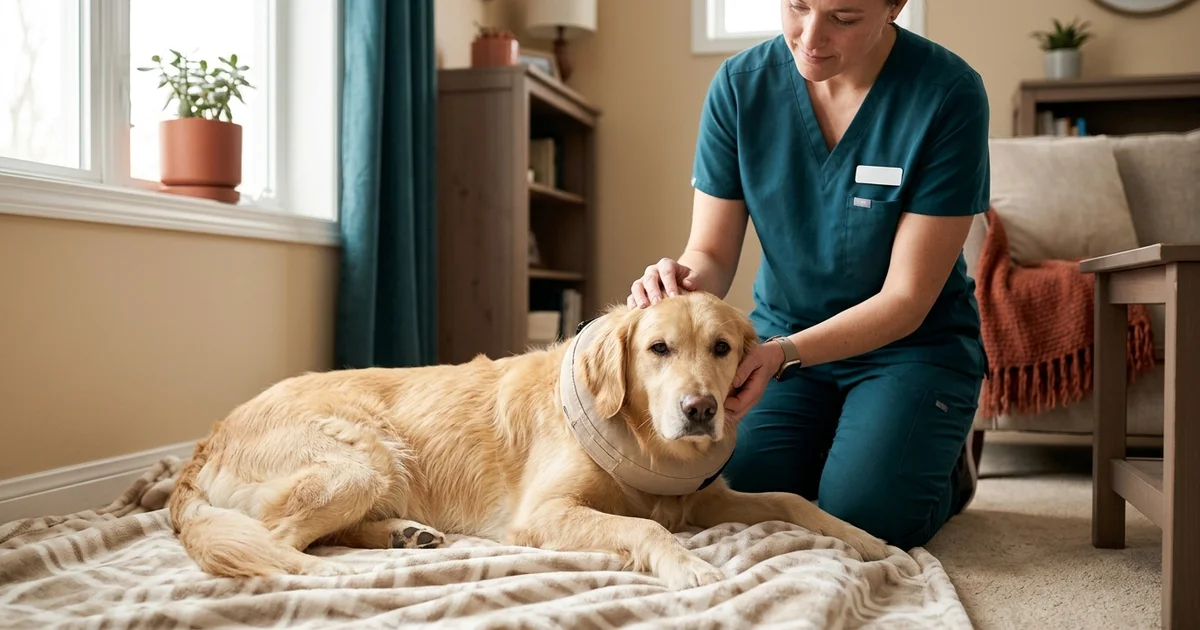
Murphy went home to Talleyville on Wednesday evening, awake and walking. The instructions that matter most after intestinal surgery are less about the incision and more about the gut. Our foreign body surgery recovery timeline sets out the same two weeks in detail:
| Days | Food | Activity |
|---|---|---|
| 1–3 | Small bland meals, four times a day | Lead only for toilet breaks |
| 4–7 | Gradually larger bland meals, three times a day | Short lead walks |
| 8–14 | Transition back to normal food | Lead walks, no running or jumping |
His owner used the recovery text line twice in the first week: once at 11pm on day two to ask whether a little clear fluid at the incision was normal (it was), and once on day five to check that a slightly smaller appetite was expected (it was). That is exactly what the line is for.
At the 12-day healing evaluation the incision had closed neatly and Murphy was cleared to go back to normal walks. The laundry basket now has a lid.
What we would tell any owner in the same position
If you know your dog has swallowed something, call the same day. Do not wait to see whether it passes, and do not make your dog vomit without speaking to a vet first. Bringing a sharp object or a corn cob back up can do more harm than leaving it where it is.
If you are not sure, but your dog is vomiting repeatedly, refusing food, straining, lethargic, or guarding a sore belly, treat it as urgent anyway.
And if you are told the wait is six weeks, that is the wait at that particular hospital. It is not a medical fact about your dog. Talleyville Dog Surgery can usually offer a date within days.
Worried your dog has swallowed something? See our emergency foreign body removal service