The four reasons a spleen comes out
Spleen removal is done for a small number of clear reasons, and knowing which one applies to your dog shapes both the urgency and the conversation about outcome. Our splenectomy service handles all four, and this guide explains who qualifies for surgery and when.
A splenic mass. A growth on or within the spleen, found either on an ultrasound done for another reason or after the dog becomes unwell.
A splenic hematoma. A blood-filled swelling within the spleen, often the benign explanation for what looked like a mass on a scan.
Acute rupture. Usually after trauma such as a road accident or a heavy fall, but sometimes a mass that has bled on its own.
Hemoperitoneum. Free blood in the abdomen from a bleeding spleen. This is the emergency presentation.
Emergency or planned?
The emergency presentation is dramatic and, in hindsight, unmistakable. A dog, often an older large breed, collapses without warning. The gums are pale, the dog is weak, and the belly may look swollen. This is a bleeding spleen filling the abdomen. It is time-critical and needs stabilization and surgery without delay.
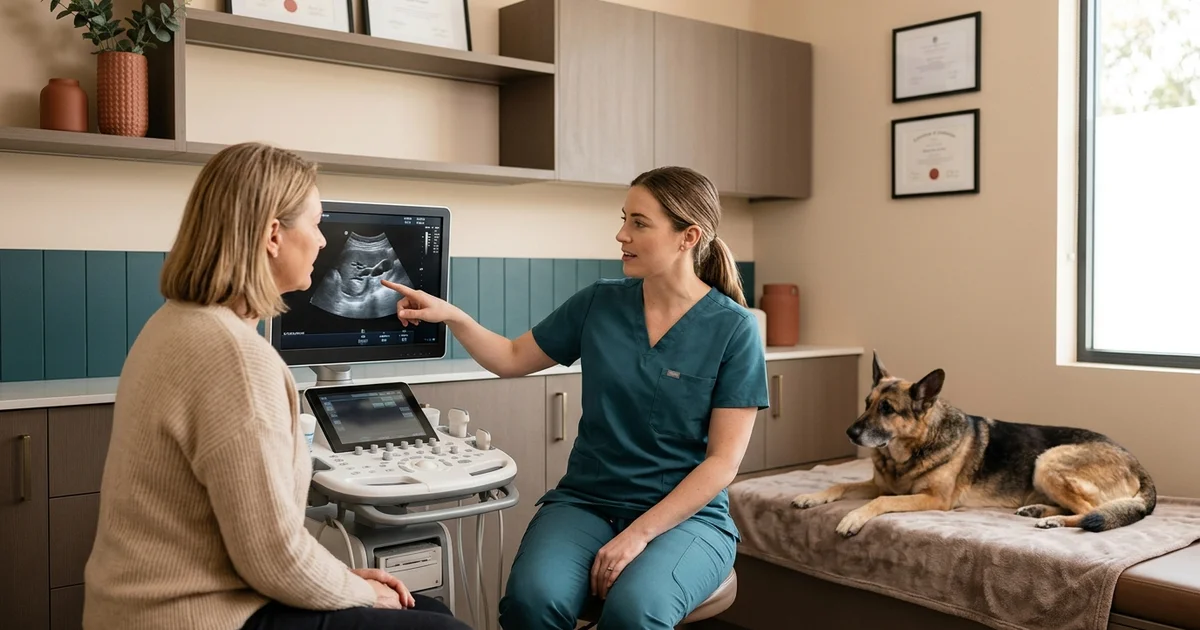
The incidental finding is the better version. A splenic mass turns up on an ultrasound done for something unrelated, in a dog who seems completely well. That allows staging, planning, and a proper conversation before anything is booked.
The fifty-fifty conversation
About half of canine splenic masses are benign. No scan can tell you which half your dog is in.
That statistic does more work than any other in this conversation. Owners facing a splenic mass diagnosis often assume the worst and ask whether surgery is worth putting their dog through.
The honest answer is that surgery is both the treatment and the diagnosis. Only histopathology of the removed spleen tells you what the mass really was. Declining surgery does not avoid a cancer diagnosis. It only avoids ever getting one, while leaving behind a mass that may bleed catastrophically.
What we do before operating
Abdominal ultrasound characterizes the splenic lesion and examines the liver, the most common site of spread if the mass is a hemangiosarcoma.
Chest radiographs look for spread to the lungs.
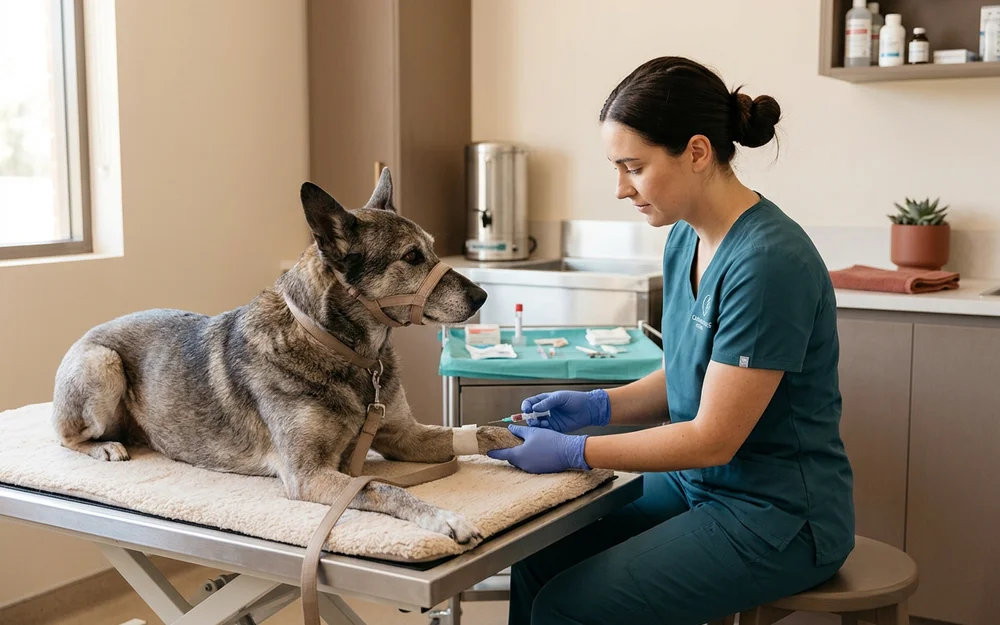
Bloodwork sets a baseline packed cell volume so ongoing blood loss can be measured against it, and checks clotting if there has been bleeding.
If a dog is actively bleeding, stabilization with IV fluids, plus a transfusion if the packed cell volume has dropped far enough, comes before anesthesia.
Age is not the deciding factor
Splenic disease mostly affects older dogs, so age alone cannot rule surgery out. What matters is organ function and heart health, both assessed before going ahead. Many of the ten- and eleven-year-old retrievers and shepherds we see from Talleyville families come through the surgery very well.
There are genuine edge cases. A dog with advanced heart disease, or one whose staging already shows widespread spread to the liver or lungs, may not be a good candidate, and in those situations an honest discussion about comfort and quality of life is the right next step. A bleeding spleen left in place in an otherwise fit dog, however, is not the conservative option. It will bleed again, and the next bleed may not be survivable.
What recovery looks like
Most dogs go home within a day or two, with two weeks of restricted activity while the abdominal incision heals. Packed cell volume and lactate are monitored through early recovery because those numbers reveal ongoing bleeding before it becomes visible.
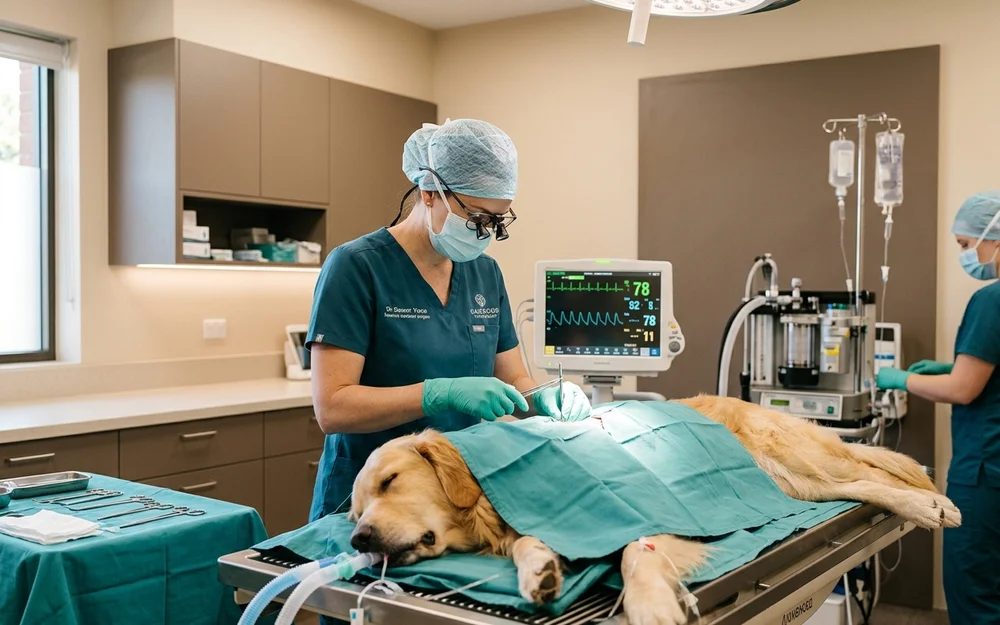
Continuous ECG monitoring runs during and after surgery, because splenic cases are linked to ventricular premature contractions. Most settle on their own, and some need treatment.
Histopathology usually comes back within a week. Whatever it says, Talleyville Dog Surgery will explain it plainly, including, if the news is not good, the realistic picture rather than a version designed to make the conversation easier.